Bohemian vs. Saxon Switzerland: What is the Difference and Which to Choose?
Two names, one stunning region. Discover the differences between the Czech and German sides of the national park and why you shouldn't limit yourself to just one.
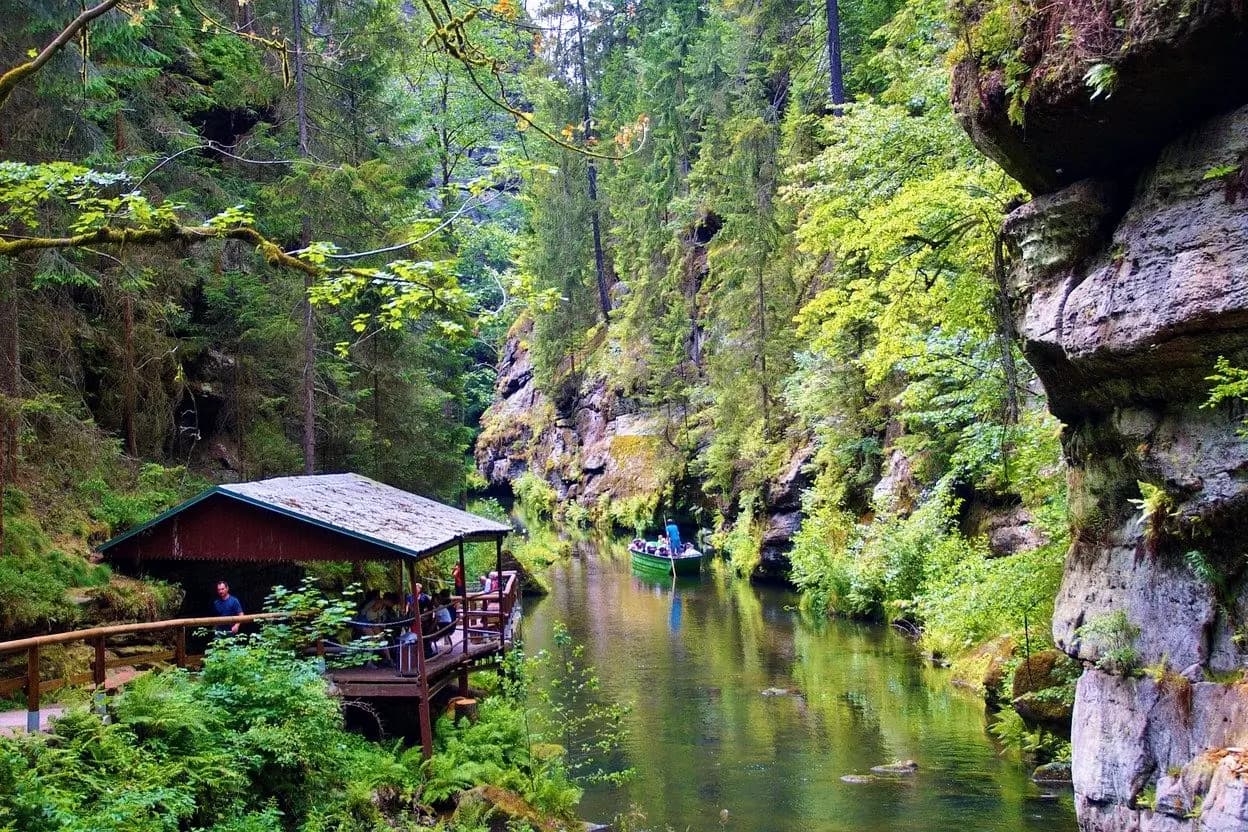
When planning a trip north of Prague or south of Dresden, travelers often run into confusing terminology. Is it better to visit Bohemian Switzerland or Saxon Switzerland? The short answer is: It is the exact same geological region, artificially divided only by a national border. However, the experiences on either side differ significantly.
Why is it called "Switzerland" in the first place?
Before diving into the differences, it helps to know where the name came from. In the 18th century, two Swiss painters, Adrian Zingg and Anton Graff, were teaching at the Dresden Academy of Fine Arts. The dramatic sandstone cliffs and deep gorges of the Elbe River reminded them so much of their homeland (the Swiss Jura mountains) that they began calling the area "Saxon Switzerland."
The name was later popularized by the famous Romantic painter Caspar David Friedrich, whose mystical paintings (like the renowned Wanderer above the Sea of Fog) drew the first generations of tourists to the region. The Czech side logically adopted this flattering title for its portion of the sandstone mountains later on.
Saxon Switzerland (The German Side)
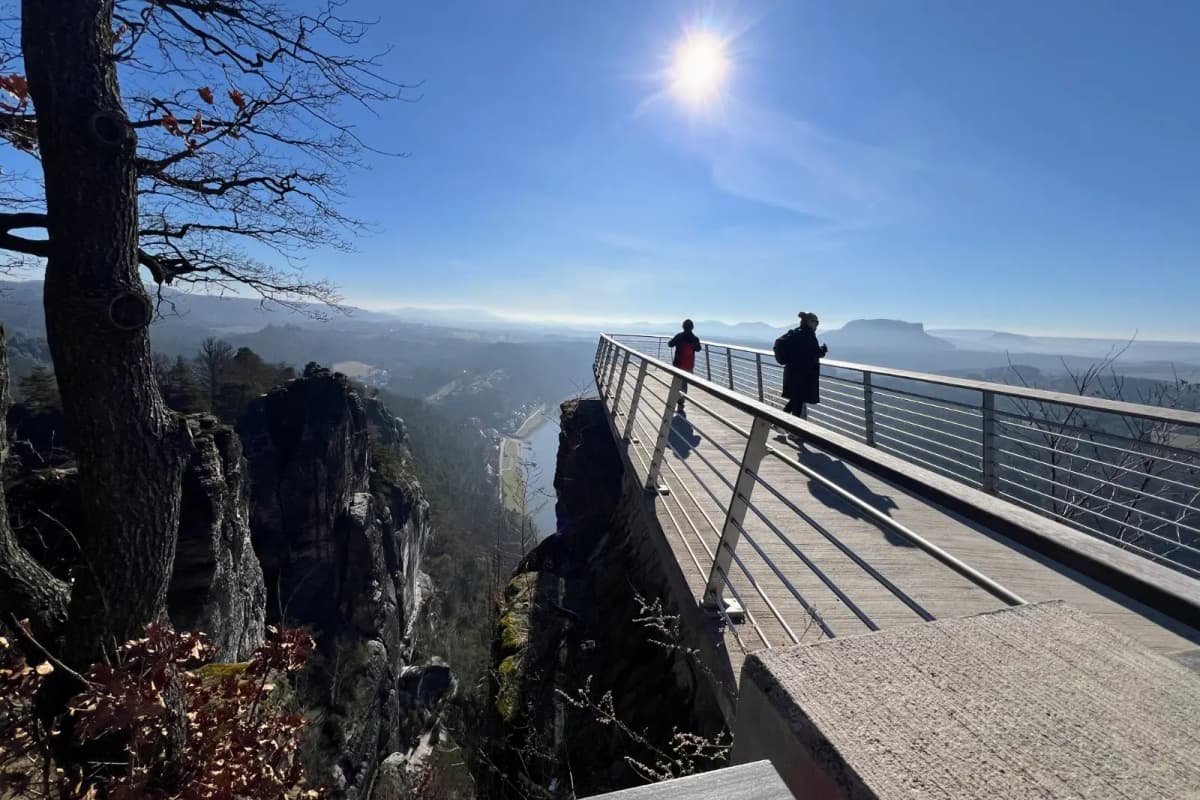
The German part of the park is famous for its majestic viewpoints and excellent accessibility. The Elbe River has carved a deep canyon here, overlooked by monumental sandstone pillars.
- Vibe: Monumental, dramatic, historical.
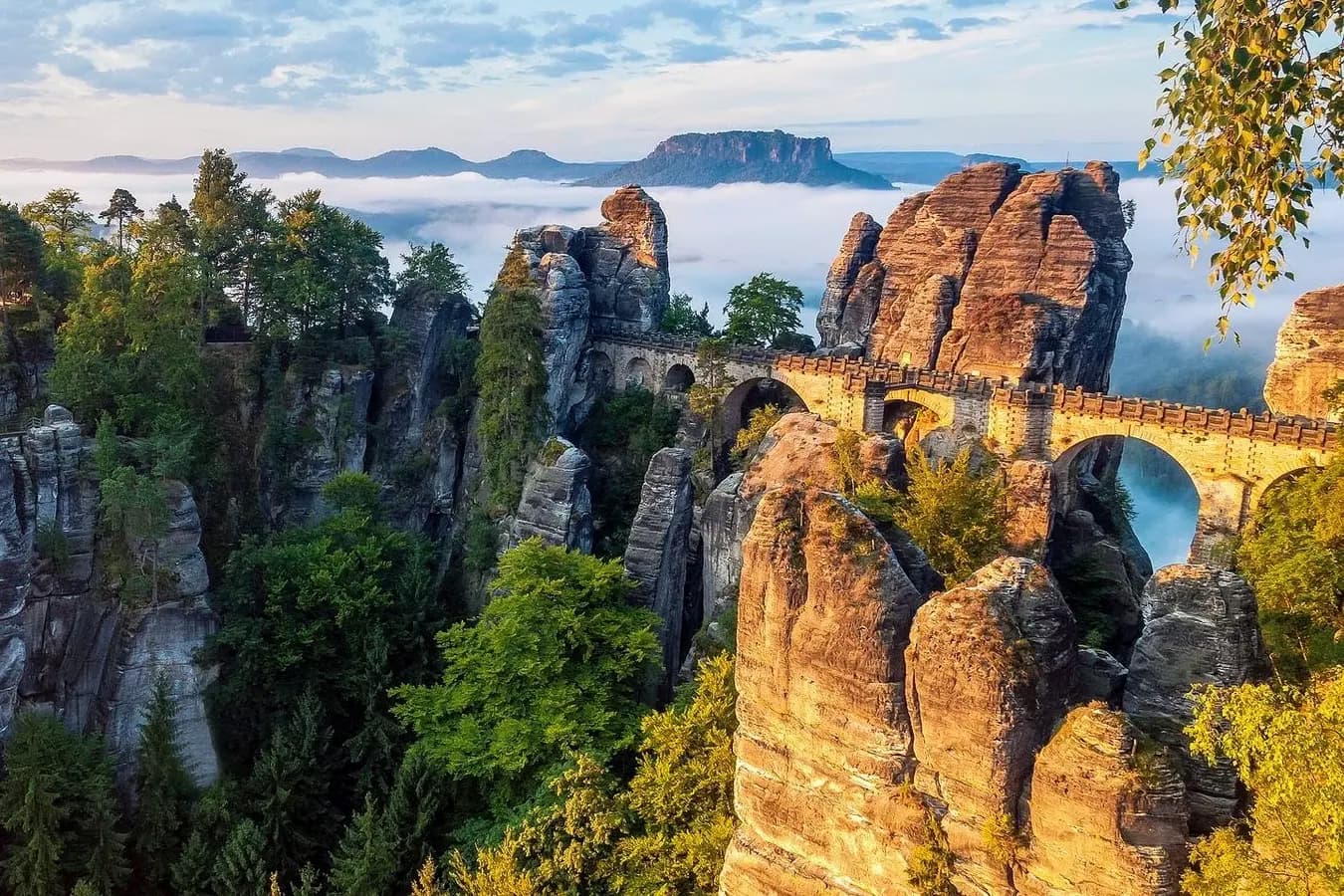
- The Main Highlight: The Bastei Bridge. This breathtaking 19th-century stone bridge offers spectacular views without the need for strenuous, steep hikes. It is a highly visual and architectural experience.
- Perfect For: Photography enthusiasts, history lovers, and those who prefer stunning panoramas with a moderate amount of walking.
Bohemian Switzerland (The Czech Side)
As soon as you cross the border into Czechia, the landscape feels wilder and more heavily forested. Instead of wide river valleys, you will find deep, moss-covered gorges and hidden rock cities.
Skip the planning
Bohemian & Saxon Switzerland Day Trip from Dresden
- Hotel pickup included
- Small group, local guide
- Traditional Czech lunch included
- Vibe: Wilder, mystical, fairytale-like.
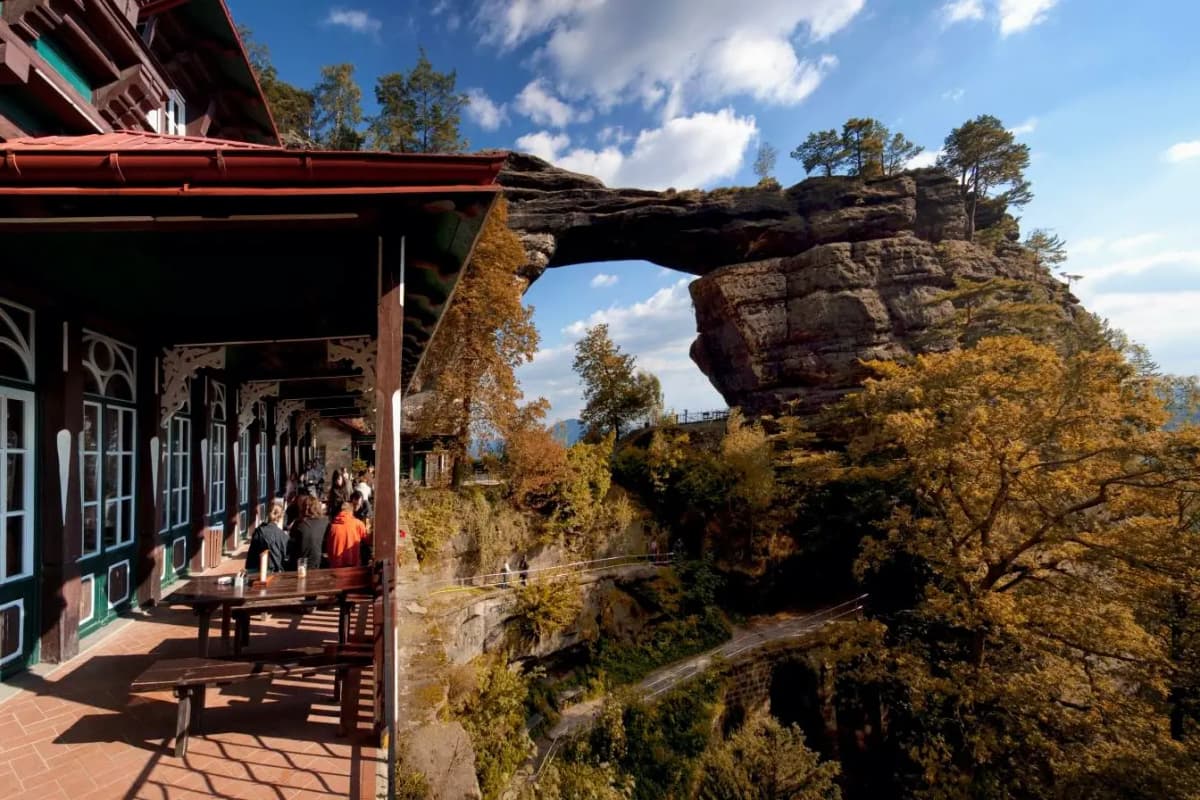
- The Main Highlights: Europe's largest natural arch, the Pravčická Gate, the romantic punt boat ride in the Kamenice River Gorges, and the cinematic Tisa Rocks labyrinth.
- Perfect For: Active travelers who enjoy discovering hidden corners and don't mind hiking through forest terrain.
Why Choose When You Can Have Both?
Trying to decide between the two sides is like choosing between an appetizer and a main course—they are meant to be enjoyed together. The real problem arises when you try to cross from one country to the other on your own using public transport. Crossing borders in this isolated region is a logistical nightmare.
The Premium Borderless Solution: Discerning travelers don't make compromises. Our all-inclusive tour from Prague and from Dresden intentionally erases the borders. In a single day, we seamlessly combine the German elegance of the Bastei Bridge with the wild mystique of the Czech Pravčická Gate and Tisa Rocks. Leave the navigation to us and enjoy the best of both worlds.
Frequently Asked Questions
What is the difference between Bohemian and Saxon Switzerland?+
It is the same geological region, divided only by a national border. Saxon Switzerland is the German side; Bohemian Switzerland is the Czech side. The experiences differ — the German side is famous for monumental viewpoints, the Czech side for deeper forests and wilder nature.
Why is it called "Switzerland"?+
In the 18th century two Swiss painters, Adrian Zingg and Anton Graff, taught at the Dresden Academy and the sandstone cliffs reminded them so much of home that they named the area "Saxon Switzerland." The Czech side later adopted the title for its part of the mountains.
Which side is the Bastei Bridge on?+
On the German (Saxon) side. The Bastei Bridge is the main landmark of Saxon Switzerland.
Which side are Pravčická Gate and the Tisa Rocks on?+
On the Czech (Bohemian) side. Pravčická Gate and the Tisa Rocks lie in and around the Bohemian Switzerland National Park.
Can you visit both sides in one day?+
Yes. The border is open and the two sides are close together, so a single day comfortably combines the best of both — typically on a guided day trip from Dresden.
Skip the planning
Bohemian & Saxon Switzerland Day Trip from Dresden
- Hotel pickup included
- Small group, local guide
- Traditional Czech lunch included